A good MK Mobile team is not simply your three strongest or rarest characters. The best teams are built around a purpose: one fighter deals reliable damage, while the other slots make that damage easier to apply, protect the main fighter or counter the mechanics of the battle.
That is why the same account may need completely different teams for Event Towers, Tower bosses, Krypt, Survivor and Realm Klash. Instead of searching for one universal trio, learn how to identify what each character contributes and whether those abilities actually work together.
You can compare proven compositions in Best Teams or build your own three-character lineup with Equipment in the Squad Builder.
Start with the job, not the characters
Before selecting three fighters, decide what the team needs to accomplish. A team designed to clear ordinary Tower battles quickly has different priorities from a boss team or a Krypt team that needs to preserve Health over many fights.
For ordinary battles, fast damage, Power control and target control can be extremely valuable. Boss fights place much more emphasis on sustained damage and mechanics that remain effective against boss immunities. Krypt and Survivor reward healing, protection and consistency because one bad fight can affect the rest of the run.
The most important team-building rule is simple:
Choose the job first, then choose the characters.
Build around a main damage dealer
Most teams benefit from having one clear primary attacker. This is usually the character who spends the most time on the field, performs most of the basic attacks and uses the Special Attacks that drive your main strategy.
Your best offensive Equipment normally belongs on this fighter as well.
A good main damage dealer usually has some combination of strong basic attacks, useful Combo Enders, reliable Special Attacks, good Power economy or a passive that directly increases offensive pressure.
The character does not always need to be your rarest card. A highly fused Gold can be a much better carry for a developing account than a Fusion 0 Diamond. Practical strength matters more than the color of the card border.
Use the Character Tier List when deciding which characters are worth building around.
The second slot should solve a problem
Once you have a main attacker, the next character should give the team something the first fighter cannot provide.
That may be:
- Power Drain;
- Snare;
- anti-healing;
- debuff resistance;
- a useful tag-in effect;
- additional damage;
- another important buff or debuff;
- a second attacker for difficult matchups.
This slot should remain flexible. Sometimes another strong damage dealer is the correct choice. In another battle, a lower-damage control character can be much more useful because they prevent the opponent from tagging, healing or using a dangerous Special Attack.
Do not evaluate the second character only by their personal damage. Ask whether adding them makes the whole team better.
The third character can be support
One of the most common mistakes is putting three attackers together simply because all three have high stats.
The third slot often provides more value as support.
A support character may contribute through a passive without spending much time in combat. They can give teammates Block Breaker, resistance, healing, resurrection, stat bonuses or protection against a dangerous mechanic.
This means the support character does not necessarily need the same Fusion as your main attacker. If their important passive works while they remain on the bench, protecting that character can sometimes be more important than tagging them in for extra damage.
A simple starting structure is:
Primary damage dealer + control/secondary damage + support
This is not a mandatory formula, but it is a very useful starting point when building a new team.
Synergy matters, but matching team names is not enough
MK11, Klassic, Kombat Cup, Strike Force, Lizard and other families often contain passives designed to interact with teammates.
That does not mean three characters with the same label automatically create the strongest possible team.
Read the passive carefully. Check exactly who receives the effect. Some passives affect every teammate, while others work only for MK11 characters, Spec Ops characters, Klassic characters or even one specific fighter.
The actual effect matters more than the team name.
Sometimes an outside support character gives your two-character core exactly what it is missing. A mixed team with real mechanical synergy can be better than a full themed team whose third character contributes very little to the current battle.
Example: Kombat Cup progression team
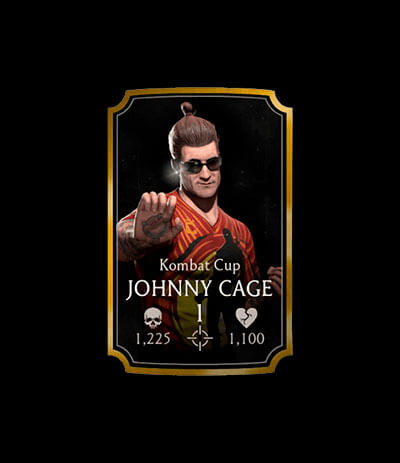
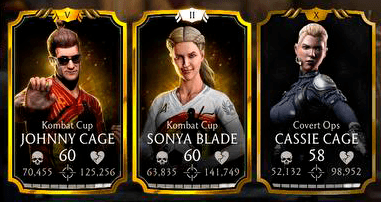
A good example is the accessible Gold core of Kombat Cup Johnny Cage + Kombat Cup Sonya Blade + Covert Ops Cassie Cage.
Johnny performs most of the direct fighting and repeatedly uses SP1 for damage and Power Drain. Sonya provides control by temporarily removing a troublesome ordinary opponent from the rotation. Cassie supports the Spec Ops core with a chance for unblockable basic attacks.
Each character has a different job.
That is why the team works: the three cards are not simply individually strong. Their roles complement each other.
The complete setup is available in Best Gold Teams.
Example: MK11 core
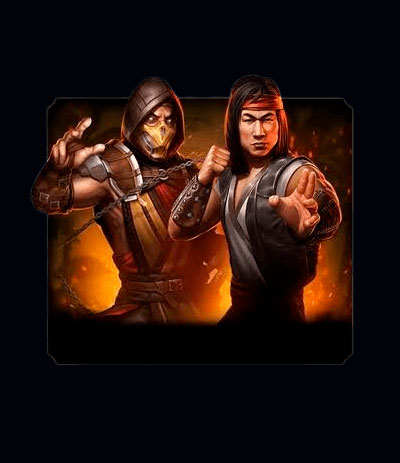
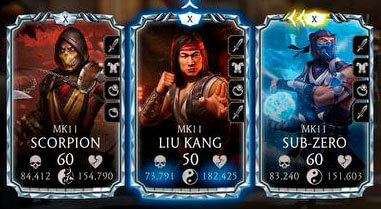
Another straightforward example is MK11 Scorpion + MK11 Liu Kang + MK11 Sub-Zero.
Scorpion can operate as the main damage dealer, while Liu Kang and Sub-Zero add utility and protection around the MK11 core. The important point is that every character does not need to compete for equal field time.
A support character can provide enormous value while spending most of the fight on the bench.
Current MK11 and other Diamond compositions can be found in Best Diamond Teams.
Build around interactions, not just passive text
Good synergy can also come from combining separate mechanics.
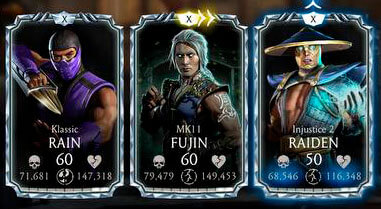
For example, a boss setup using Klassic Rain + MK11 Fujin + Injustice 2 Raiden works because the characters create an interaction rather than simply being three individually strong cards.
Rain can prepare Soaked, Fujin contributes Hurricane, and Raiden can take advantage of the resulting Lightning interaction.
That is a stronger team-building concept than selecting three characters only because all three rank highly individually.
Ask:
What does Character A enable Character B to do?
Then ask whether Character C makes that sequence stronger, safer or more reliable.
Boss-focused examples are available in Best Tower Boss Teams.
Fusion still matters
Perfect synergy cannot completely replace stats.
A theoretically excellent team at very low Fusion can still struggle against content that your highly fused Gold team clears comfortably.
When deciding between two possible team members, compare not only their tier and passive but also their actual Fusion, level and available Equipment.
This is especially important for developing accounts.
Do not abandon a reliable high-Fusion team just because you pulled several famous Diamond characters at Fusion 0. Low-Fusion support can still be useful when its passive provides immediate value, but your properly developed fighters may remain better choices for dealing most of the damage.
Equipment should reinforce each role
Team building does not end after selecting three characters. Equipment should strengthen the role you already assigned to each fighter.
Your primary attacker may need:
- Block Breaker;
- Power Generation;
- reduced Special Attack cost;
- offensive bonuses.
A support character may benefit more from Health, resistance, starting Power or utility effects.
In Event Towers, current Tower Equipment can provide enormous Attack and Health bonuses, but it should not automatically replace essential mechanics that your fighter needs to function.
Do not give the same Equipment setup to all three characters.
Use the Equipment Tier List to compare individual cards.
For Block Breaker, Power Generation and basic Equipment priorities, see the MK Mobile Equipment Guide for Beginners.
Do not forget the Kameo
In the current version of MK Mobile, the three-character team can also be supported by a Kameo.
Treat the Kameo as an additional tool rather than the foundation of the team. First make sure your three main fighters already have a clear damage plan, support structure and rotation. Then choose a Kameo whose attacks or effects solve another problem.
A Kameo can add another Kombat Effect, provide extra control or help interrupt an opponent through its defensive ability.
The same rule applies here as with normal support characters: choose the Kameo because its mechanics help your team, not simply because the card is rare.
Build differently for different modes
A team that is excellent in one mode may be mediocre in another.
Event Towers
Ordinary Tower battles reward fast damage and the ability to counter specific modifiers. DOT, Power control, Snare, resistance and Tower Equipment can all be important depending on the floor.
Tower bosses
Bosses change the rules. Many normal control and percentage-based mechanics are restricted, while the timer makes sustained damage extremely important.
A boss team should usually be built around a repeatable source of damage, with the remaining fighters supporting that plan or preventing the boss from healing.
Krypt
Krypt rewards consistency. Health persists during the run, so healing, resurrection, resistance and safe rotations become much more valuable than simply winning one fight as quickly as possible.
See Best Teams for Krypt.
Survivor
Survivor also preserves Health and requires careful use of your collection. Building several functional teams can be more useful than investing every strong fighter and Equipment card into one lineup.
See Best Survivor Teams.
Realm Klash
Klash Tower offense is heavily matchup-dependent. You can change teams between floors, so inspect the defending characters, Equipment, Kameo and modifiers before selecting the appropriate counter.
A good team needs a rotation
Three characters with compatible passives can still perform badly if you do not know how to play the composition.
Decide who starts the battle, when the first tag should happen and which Special Attack drives the rotation. Know which fighter you want to keep safe and who should take over if the primary damage dealer becomes vulnerable.
A useful team should have a basic plan you can explain in a few sentences.
For example:
Start with the main attacker, build enough Power for the key Special, tag to activate the support effect, then return to the attacker while the opponent is controlled.
If you cannot identify the team's basic rotation, the composition may be relying too heavily on raw stats instead of real synergy.
Test the team against its weaknesses
Do not judge a new team only after easy victories.
Check what happens when:
- the main attacker is Stunned or Frozen;
- the opponent resists your main debuff;
- healing is disabled;
- tagging is restricted;
- DOT does not work;
- the opponent can dodge;
- the battle requires more damage than your support-heavy team can produce.
Every team has weaknesses.
The goal is not to create a lineup with no counters. The goal is to understand what the team does well and know when one slot should be changed.
Use Squad Builder before changing your setup
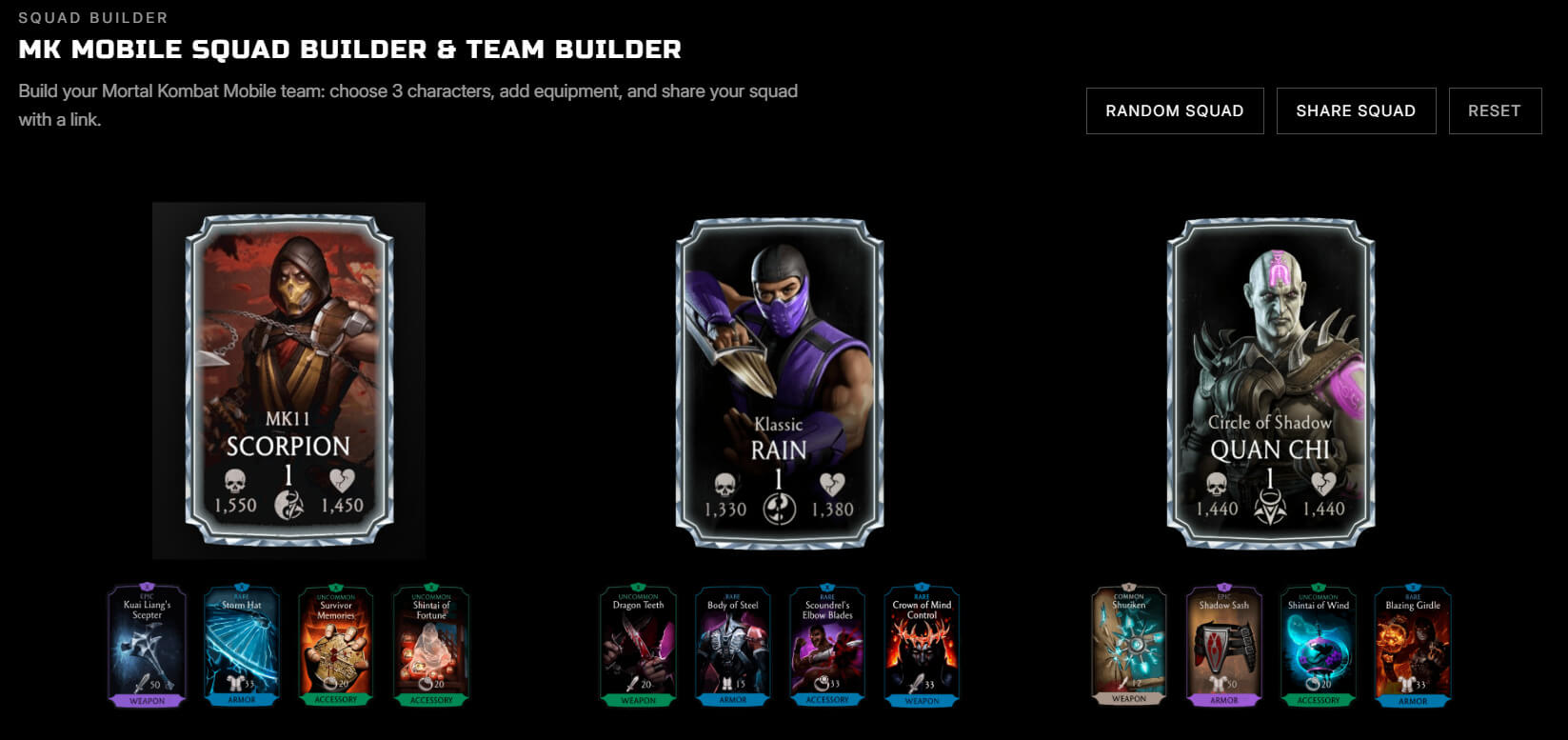
MK Mobile Base has a Squad Builder designed for this process.
Choose three characters, assign Equipment and compare the roles of each slot. You can then share the completed squad.
This is especially useful when experimenting with replacements. Instead of asking only whether the replacement character is stronger, compare which mechanic disappears from the team and which new mechanic is added.
When you want proven starting points instead of building from scratch, use Best Teams.
The section separates compositions by Gold, Diamond, Towers, bosses, Krypt, Survivor and Realm Klash, so you can begin with a team designed for the content you actually want to play.
Common team-building mistakes
- Using the three highest-rarity cards without checking their passives.
- Building three damage dealers with no control or support.
- Forcing three characters from the same team even when the third one adds little value.
- Ignoring Fusion when comparing Gold and Diamond fighters.
- Giving every character the same Equipment.
- Allowing an important passive support to die unnecessarily.
- Expecting one team to work equally well in Towers, bosses, Krypt and Survivor.
- Ignoring the battle modifier and repeatedly using a countered strategy.
- Choosing a replacement because of its tier instead of the role it performs.
- Building a strong-looking team without deciding how its tags and Special Attacks should actually rotate.
A simple formula for building a good MK Mobile team
Start by choosing the content you want to clear. Pick your best practical damage dealer for that job, then add one fighter who provides control or a second damage option and one character who supplies support or survivability.
Read every passive and make sure the important effects actually apply to the other members. Equip each character for their own role rather than rarity alone, then test the rotation against the mechanics most likely to stop it.
There is no single best team for every battle in MK Mobile.
A good team is one where all three characters have a clear reason to be there.
Build and share your own squad with the Squad Builder, or compare tested compositions in Best Teams.
Thank you for reading, and good luck with your MK Mobile account progression!